Gourmet Rhapsody: My intro to Muriel Barbery
Gourmet Rhapsody, by Muriel Barbery. Translation by Alison Anderson. Spoilers (of a sort) below.
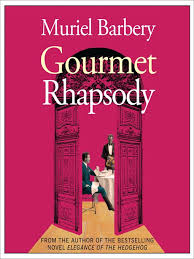
So this book was the one I started with when I decided to consciously start expanding my reading from just fantasy and sci-fi to more contemporary fiction. I was feeling a bit wary, as I had absolutely no mental template for how to pick what I might like, and this one caught my eye because of the mention of food, if I'm being honest.
I kind of fell in love. And that really wasn't what I'd expected.
It's by no means a nice, feel good book, but it's also not a down right depressing read. Sometimes I was vaguely uncomfortable, (which I think was the point) and other times I was completely swept up in a scene about Marseille, the sun on the water, and a shellfish stew and left feeling like I was missing out on something incredibly special.
It's basically about the end of the life of a famous food critic, Pierre Athens, and switches between his memories of his love affair with food and it's progression over the years, and the in the moment responses and feelings of the people in his life as he lies dying. He's established very early on as a selfish, self absorbed man who doesn't care too much about other people. No one really likes him much, and the chapters from the point of view of his family members can be both interesting and uncomfortable. (yes, there are people like that out there)
Every other chapter though, is from his perspective as he remembers food, taste, and smells from over the years.
This is where everything comes alive.
Each food chapter has something of a theme. Fish, bread, meat, etc. The prose is flowery, and if you don't have much patience for that you'll probably get annoyed with the book fairly quickly, but it worked for me. (The bread chapter especially. I've had fresh French rolls, and there's nothing quite like a warm soft roll for breakfast.) as I read these chapters I got an idea of Athens as something other than a distant, snobbish old man, and begin to sympathize with him (reluctantly at first, I must admit) and just revelled in the descriptions of taste and smell. (how can you tell I love food....?)

The juxtaposition of the two types of chapters (grief and wrestling with unresolved issues likely to stay that way on the one hand, and softer, pleasant memories and might have beens on the other), create something of a see saw when it comes to reactions and thoughts on the book as a whole. Which isn't a bad thing. It certainly brought up a variety of feelings on my part, and it got me hooked on Muriel barbery as an author. I enjoyed it, and I'd recommend it to most people, but I can also see why some people wouldn't like it. There's a certain amount of whiplash while reading it and if you don't like lush, somewhat wordy descriptions of food than this book is not for you. If you like either of those, though, go for it.
So this book was the one I started with when I decided to consciously start expanding my reading from just fantasy and sci-fi to more contemporary fiction. I was feeling a bit wary, as I had absolutely no mental template for how to pick what I might like, and this one caught my eye because of the mention of food, if I'm being honest.
I kind of fell in love. And that really wasn't what I'd expected.
It's by no means a nice, feel good book, but it's also not a down right depressing read. Sometimes I was vaguely uncomfortable, (which I think was the point) and other times I was completely swept up in a scene about Marseille, the sun on the water, and a shellfish stew and left feeling like I was missing out on something incredibly special.
It's basically about the end of the life of a famous food critic, Pierre Athens, and switches between his memories of his love affair with food and it's progression over the years, and the in the moment responses and feelings of the people in his life as he lies dying. He's established very early on as a selfish, self absorbed man who doesn't care too much about other people. No one really likes him much, and the chapters from the point of view of his family members can be both interesting and uncomfortable. (yes, there are people like that out there)
Every other chapter though, is from his perspective as he remembers food, taste, and smells from over the years.
This is where everything comes alive.
Each food chapter has something of a theme. Fish, bread, meat, etc. The prose is flowery, and if you don't have much patience for that you'll probably get annoyed with the book fairly quickly, but it worked for me. (The bread chapter especially. I've had fresh French rolls, and there's nothing quite like a warm soft roll for breakfast.) as I read these chapters I got an idea of Athens as something other than a distant, snobbish old man, and begin to sympathize with him (reluctantly at first, I must admit) and just revelled in the descriptions of taste and smell. (how can you tell I love food....?)

The juxtaposition of the two types of chapters (grief and wrestling with unresolved issues likely to stay that way on the one hand, and softer, pleasant memories and might have beens on the other), create something of a see saw when it comes to reactions and thoughts on the book as a whole. Which isn't a bad thing. It certainly brought up a variety of feelings on my part, and it got me hooked on Muriel barbery as an author. I enjoyed it, and I'd recommend it to most people, but I can also see why some people wouldn't like it. There's a certain amount of whiplash while reading it and if you don't like lush, somewhat wordy descriptions of food than this book is not for you. If you like either of those, though, go for it.

Comments
Post a Comment